

🕑 5 min read
Just because you’ve played a few rounds on rummy doesn’t mean you really know rummy rules 13 card. Many people think they understand it. They think, “Oh, it’s just about making sets and sequences, right?” Well… not quite. There’s so much more lurking beneath those 13 cards in your hand. From pure sequences to the sneaky joker combinations, the rules have layers. And trust me, missing even one tiny nuance can cost you the game — sometimes big time. We’re diving deep, Yono Games style, into the real deal of 13-card rummy.
What is 13-Card Rummy Anyway?
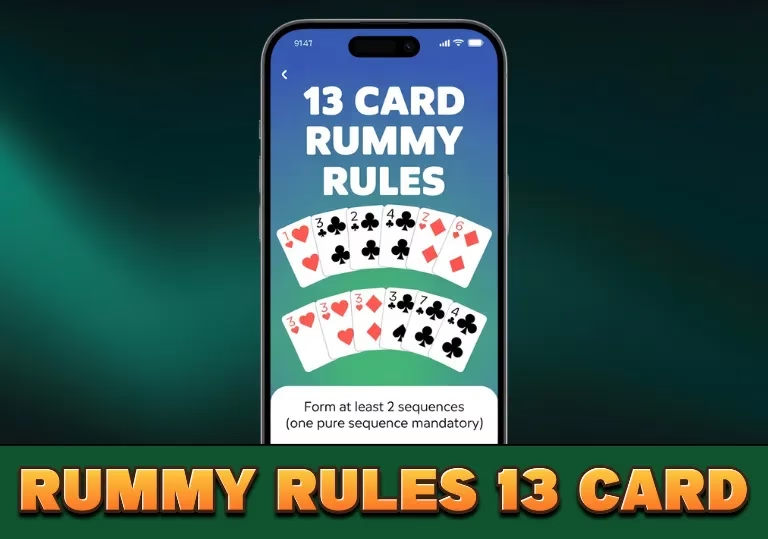
Okay, first things first — what exactly are we yonolink.com/rummy-nabob-51-bonus/” title=”Why Everyone’s yonolink.com/rummy-nabob-51-bonus/" title="Why Everyone’s Talking 51 Bonus">About the Rummy Nabob 51 Bonus">Talking About the Rummy Nabob 51 Bonus“>talking about here? 13-card rummy is basically the Indian version of the classic rummy card game, played with a standard deck of 52 cards. In India, it’s usually played with 2 decks when more than two players are in the game. The aim? Simple-ish. You have to arrange your 13 cards into valid sequences and sets. But don’t get too relaxed. There’s a catch: you need at least one pure sequence — no jokers, no cheating. That little detail is the deal-breaker for beginners.
Sequences and Sets – Breaking It Down
- Pure Sequence: Three or more consecutive cards of the same suit without jokers. Think of it as the backbone of your hand. No pure sequence = no win. Period.
- Impure Sequence: Consecutive cards of the same suit, but here you can throw in a joker if something’s missing. Handy, right?
- Sets: Three or four cards of the same rank, but different suits. Again, jokers can fill in. But remember, only after you have your pure sequence.
See? Already, it’s not as simple as “just match your cards” to rummy rules 13 card.
Joker Rules: More Than Just a Wild Card
Ah, jokers — the most talked-about but often misunderstood part of rummy. There are two kinds in Indian 13-card rummy:
- Printed Jokers: The cards that literally say “Joker.” They are wild.
- Random Jokers: Chosen at the start of the game from the remaining deck. Could be any card — say, 7 of hearts. All 7s now act as jokers.
And yes, people do get confused here. The random joker can completely change your strategy. Suddenly, that 7 you were stuck with? It’s now your golden ticket to forming multiple sets or sequences.
Common Mistakes Beginners Make
If you’re new-ish to rummy, or even if you’ve been playing for a while, these mistakes can sneak up on you if you don’t know the rummy rules 13 card:
- Skipping the Pure Sequence: Remember, without it, you can’t declare. So don’t get too carried away with sets and impure sequences first.
- Ignoring Joker Placement: People often misuse jokers. Place them smartly. Don’t just dump them wherever.
- Rushing to Declare: The temptation is real. But patience wins. Wait for the right combination, or you might end up with negative points.
Even seasoned players mess this up occasionally — trust me, I’ve been there.
Scoring in 13-Card Rummy
Now, scoring can get a bit tricky, especially with the Indian version. Here’s the quick lowdown:
- Face Cards (K, Q, J) and Aces: 10 points each if they’re left unmelded.
- Number Cards: Face value. Left with a 3 of hearts? That’s 3 points.
- Jokers: Zero points, naturally.
Tip from experience: aim to keep high-value cards in sequences as early as possible. Nothing worse than holding a king while your opponent declares.
Online vs Offline Rummy: Indian Context
You know, rummy has evolved. Traditional table-Top Rummy is still a thing in Indian homes, but now, online platforms are booming. And online rummy follows the same 13-card rules, but the speed, the auto-shuffling, and random joker selection make it slightly different. Advantage? Less human error, no cheating. Disadvantage? You have to adapt quickly; you can’t just bluff like in live games.
Advanced Tips & Strategies
Alright, now we get to the fun part. The part where casual players start sweating.
- Watch the Discards: Keep an eye on what your opponents are picking and discarding. That tells a lot.
- Balance Sequences & Sets: Don’t focus entirely on sets. You’ll need at least one pure sequence to survive.
- Use Jokers Wisely: Not just to complete sets, but also to block your opponent’s potential sequences. Sneaky, but effective.
- Mind the High Cards: Discard them early unless you can make a quick sequence. Points rack up fast if left in hand.
Rummy is as much about observation as it is about luck.
Fun Indian Variations You Might Not Know
Here’s the quirky part — Indian households often play slight variations of the 13-card rummy.
- Points Rummy: A fast-paced version where every hand is played for points.
- Pool Rummy: Played until a player reaches a certain score, like 101 or 201.
- Deals Rummy: Fixed number of deals, and the winner is the one with the least points at the end.
These variations might tweak a rule or two, especially around jokers or scoring, so always clarify before starting.
The Psychology of 13-Card Rummy
Here’s the thing — rummy isn’t just cards. It’s about patience, reading opponents, calculating risk, and, honestly, keeping calm when your heart is screaming “Declare now!” Experienced Indian players often rely on intuition, watching subtle cues like hesitation, quick discards, or repeated card patterns. It’s like a mini mental chess game with cards.
Conclusion
So, you thought you knew rummy rules 13 card? Well, now you see, there’s a lot more than just matching cards. From understanding sequences, sets, and jokers to mastering scoring, strategy, and Indian variations, it’s a full-on skill game. Sure, luck plays a part — a big one sometimes — but skill, patience, and observation win the game consistently. Next time you sit down at a family gathering or fire up an online rummy app, remember this: don’t just play, play smart. The difference between a casual player and a seasoned rummy champ lies in those subtle nuances you might have ignored. So shuffle, deal, and may your 13 cards be ever in your favor!








Leave a Reply